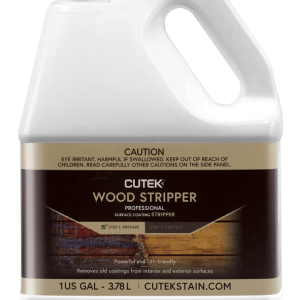

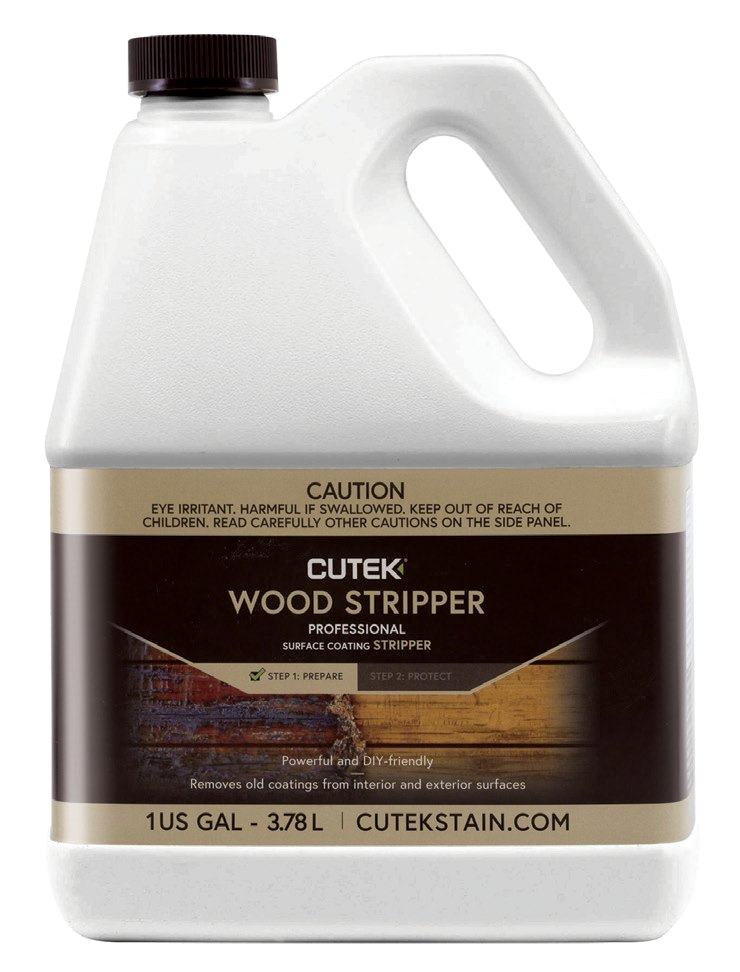
Old paint, stain, or varnish standing between you and a fresh CUTEK finish? CUTEK® Wood Stripper clears it away without the harsh chemicals found in most traditional strippers — making it a practical choice for pros and first-time DIYers alike.
- CUTEK® Wood Stripper removes multiple layers of latex paints, stains, varnishes, acrylics, and other coatings from wood, metal, brick, and masonry.
- A safer alternative formula, it does not contain harsh chemicals like methylene chloride or NMP, making it DIY-friendly with no special experience required.
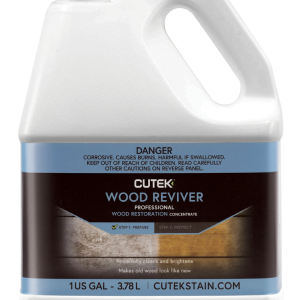
- After stripping, clean wood with CUTEK® Wood Reviver to neutralize residue and restore brightness; light sanding may be needed for raised grain.
The formula breaks down multiple layers of film-forming finishes, including latex paint, stain, varnish, linseed oil, and acrylic coatings, and works just as well on metal, brick, and masonry as it does on wood.
Because it’s built without methylene chloride or NMP — two chemicals common in older stripping products — CUTEK® Wood Stripper gives you the stripping power you need with a formula that’s easier to work with.
Why CUTEK® Wood Stripper
Strips multiple surface types.
One product handles old coatings on wood, metal, brick, and masonry alike.
Skips the harshest chemicals.
No methylene chloride or NMP, so you get effective stripping without the drawbacks of older-generation formulas.
Built for any skill level.
Straightforward enough for a first-time DIYer, powerful enough for a professional crew — no specialized training needed.
Where It’s Used
- Lifting old paint, stain, or coatings off exterior wood before refinishing
- Stripping film-forming finishes from metal, brick, and masonry surfaces
Before You Begin
Coatings vary widely from one project to the next, so run a small test patch first — about 10 square feet is plenty. A test tells you three things before you commit to the whole project:
- How long the product needs to dwell on that particular coating
- Roughly how much product the full job will take
- Whether this coating needs one pass or several
Heavier, multi-layer finishes often need more than one application to fully release — plan for that going in rather than being surprised by it.
Safety First
- Read the Safety Data Sheet (SDS) before you start, and follow its guidance on hazards
- Wear the protective equipment it recommends
- Cover or shield nearby surfaces and plants that shouldn’t come into contact with the stripper
- Watch wind direction when rinsing — drift can carry runoff toward cars, walkways, or bystanders
- Pre-wet and rinse any adjacent vegetation, concrete, or asphalt both before and after the job
How to Apply It
- Make sure the wood is fully dry, then spread the product evenly with a brush, roller, or paint pad
- Work it into the grain so it can reach the coating underneath
- Let it dwell for 30–60 minutes
- Keep the surface active while it works — reapply where it’s drying out, and agitate lightly with your applicator
A few things to keep in mind while you work:
- Treated surfaces get slippery — stay off them until they’re rinsed
- Check progress periodically with a scraper to see whether the old coating is lifting
- Start on a small section first (roughly 10 sq. ft.) to get a feel for timing before tackling the full area
Rinsing It Off
Once the old finish has released, rinse it away with a pressure washer at around 750 PSI (50 bar) fitted with a fan tip. A garden hose won’t generate enough force to clear it — this step really does need a pressure washer.
A couple of precautions protect the wood while you rinse:
- Skip turbo or rotary nozzles, which can gouge the wood fibers
- Adjust your pressure and standoff distance to match the surface
For the cleanest result, start at the lowest point of the surface and work your way up, rinsing with the grain in long, even passes. Rinsing top-down instead lets loosened product run onto the wood below, where it can get tacky and harder to remove.
How Far a Gallon Goes
Plan on roughly 120 square feet per gallon as a baseline. Actual coverage shifts based on:
- What type of coating you’re removing
- How thick it is and how many layers have built up over time
Getting the Wood Ready for Its Next Finish
Follow up a stripping job with CUTEK® Wood Reviver to neutralize any remaining residue and brighten the wood before you apply a new finish.
Some species will show a raised grain after stripping. If that happens, a light sanding pass or a scrub with an abrasive pad will smooth it back out.
Cleanup & Disposal
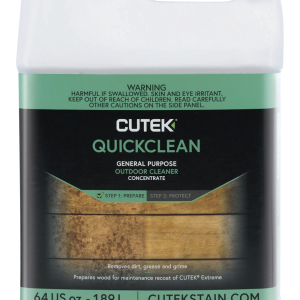
- Clean tools and equipment with CUTEK® Quickclean, or with plain soap/detergent and water
- Dispose of wash water and used materials according to your local regulations
Frequently Asked Questions
What surfaces can I use CUTEK® Wood Stripper on?
Wood, metal, brick, and masonry. It’s formulated to lift latex paint, stain, varnish, linseed oil, acrylics, and other film-forming coatings from any of these surfaces.
Does CUTEK® Wood Stripper contain methylene chloride or NMP?
No. It’s formulated without either chemical, which is what sets it apart from many traditional stripping products on the market.
How long should I let it sit before rinsing?
Plan on a 30–60 minute dwell time. Keep the surface active during that window by reapplying product where it starts to dry out and lightly agitating with your brush, roller, or pad.
Can I rinse it off with a garden hose?
No — a garden hose doesn’t generate enough force. You’ll need a pressure washer running around 750 PSI (50 bar) with a fan tip to fully clear the loosened coating.
How much coverage should I expect from one gallon?
Roughly 120 square feet per gallon as a starting estimate. Actual coverage depends on the type of coating you’re removing and how many layers have built up.
What should I do to the wood after stripping, before applying a new finish?
Clean it with CUTEK® Wood Reviver to neutralize any leftover residue and brighten the surface. If the wood shows a raised grain afterward, a light sanding pass or an abrasive pad will smooth it back down before you recoat.